Last shot of the day on a film set, also the last name of the author of this blog. Martin - Latin singular, those soldiers who work for Mars, God of War. A smith. In this lifetime of words, music and film. AKA "The Afterlife Expert" (Coast to Coast AM) If you want to reach me, I can be found on FB, LinkedIn, or Gmail under MartiniProds (my youtube channel)
Freewheeling fun interview with Tara Marie live! Talking about things seen and unseen. Wed 8/19 #TARAMARIELIVE @MartiniFilm discusses the#afterlife! 6-8p ET @AmLatinoRadio @SIIRIUSXM Ch154 http://t.co/Gtw2qaWrOR
Last night I was having an interesting discussion with a Jungian psychologist, a very successful gentleman in his 60's, and we were at the memorial service for a mutual friend, a doctor who had passed away in the prime of his youth. I spoke to the sister in law of the doctor, asked if she had felt his presence at all since his passing and she said she had "felt him around her."
Dancing in the clouds
Normally people stop after that question and comment how wonderful that is to experience. But of course, I'm not a normal person when it comes to the flipside. So I asked her what the most significant experience was. She said that she felt him "lean against her" as if he was putting his head on her shoulder. I asked if she heard or sensed any message from him. She said she had, that he said "Thanks for holding up the tent." I asked her what that meant. She said she didn't know.
The bedroom as he left it at the Potala; HHDL. Another form of tent.
This friend is a doctor as well, from a family of doctors, attorneys, lawyers, all people who've been hard at work helping others, helping people heal. I asked the deceased doctor's brother if he was aware that his brother had "spoken" to his wife from the Flipside. He wasn't. She laughed "He never asks me about that sort of thing." So when I sat with the Dr., the Jungian psychologist, we talked about how people don't have the words to discuss these events, don't really have the syntax to express what they saw or felt. People can describe a "dream" - but dreams are not always the same. Some are more vivid than others. He shared with me that one of his patients had called him recently and said he was going for a walk at dawn, walking along the beach on a dark cloudy day. The client said that the clouds "parted" and a ray of light came down and an "angel" appeared before him. The patient screamed in terror, as it frightened him half to death. (Great term isn't it? "Half to death.") He said when he screamed, or jumped in terror, the angel disappeared.
The ghost in my cappuccino.
I offered that the word "angel" is a word we use as a placeholder. We don't really know what an angel is or who that angel was, unless we ask them questions. And we don't really know if they have wings, or what wings are made of unless we examine them more closely. And I've seen or filmed sessions with people who do just that - the hypnotherapist can ask the questions - "who are you?" And sometimes they'll give a name, but even then they'll explain "that's not how I refer to myself over here, or how others refer to me over here, but it's the easiest name I can think of to give you a reference." Michael. Gabriel. Etc. The famous names. Are these folks actually "the archangel Gabriel or Michael?" It's possible. It's equally possible that people are making these things up with their subconscious. But its when you get "new information" from the flipside that we can examine these events in closer detail. But let's just agree that this energetic form that appears to a person is someone who is either no longer on the planet, or someone who never was on the planet. Either is possible. It's also possible that they're some form of a guardian angel - as the thousands of reports I mention in Flipside where people meet their "guardian spirit." Some are "dressed in white." Of course, no one is wearing a color. White is an energetic wave that we see and is translated in the miracle of our brain to become the color white. It is not white per se - but the vibration of white.
A sea of white, being held in place by mom, circa 1959
So when people see a "ghost" or someone wearing "white" - just assume that they're witnessing some form of energy that is affecting their brain. (And equally that they could be imagining it - except of course, when they aren't, or in the case where more than one person witnesses the energetic form.) But whoever it was that appeared to the person walking on the beach miscalculated that event. In other words, the person walking on the beach couldn't have conjured up the event, because why would they have conjured up an event in order to be frightened enough to "scare" the energy away? And the "angel" itself couldn't have expected this person to scream or be frightened, else, why make the journey? It takes a lot of energetic movement to change from one realm to the next, and if everyone could do it, why wouldn't they? In this case, the angel made a mistake. Which goes to my point that angels are not "omniscient" or "godlike." To be sure, the reports of wise elders and guardians are of a higher power, of someone really smarter and more wise than the person they're visiting - but they're not omniscient. Meaning the angel thought that showing up on the beach at dawn was a good idea that there would be a good outcome as a result of it. Not so much. As it turned out, this person wasn't ready to experience that event. Maybe another time. So when we talk to someone from the Flipside - it's not that they've completely lost who they were - they're a heightened version of themselves over there to be sure - but they still have a sense of humor, or a sense of awe, or love. But we have to imagine for a moment how difficult it may be to communicate with our side of the coin, slowing their energy down, trying to form words, or concepts, or even dreams in their loved ones. And it doesn't always work properly, does it?
Santa Monica Sunset. A sunrise somewhere else.
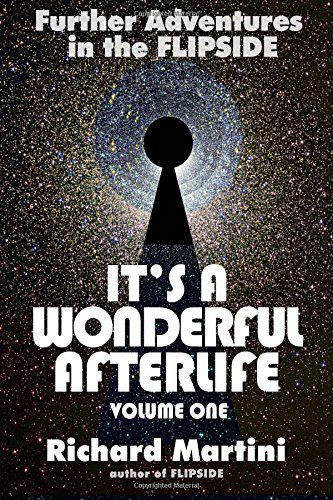
For example in "It's a Wonderful Afterlife" one woman saw her spirit guide "dressed as a monk in a robe." The therapist asked "describe the robe." She said it was brown and he had a cowl, but looked a bit like the actor who played "Friar Tuck" in the television series "Robin Hood." (Allowing that she may have imagined that person because she knew him, or he appeared to her in that form because he was tapping into the memory of this person.) The therapist asked "So why is he dressed like that?" And the woman under hypnosis laughed. She said "He just said "I left my clown outfit at the cleaners." Now did this woman make that joke up? She insisted that she didn't. You have to imagine for a moment the powerful emotions this person was experiencing, having already witnessed a previous lifetime (and a serious one) and now had traveled somewhere outside of time and space to see someone who could only be described as "her spirit guide" or her mentor. And he came up with a joke that made her and the therapist laugh. New information. Not coming from her. Coming from someone, or somewhere else. So when someone from the flipside reaches out to talk to us, note the ideas or concepts that you could not have been aware of. New information. Something you didn't know, or couldn't have thought of or made up on your own. As in the case of my friend had no idea what her deceased brother in law meant by "holding up the tent."
Are you talking to me?
When she told me that, I laughed, and said "Perhaps he's talking about the three ring circus that is your in-laws." She laughed as well. I suggested everyone meditate on what he meant, and what it means to be the one "holding up the tent." Sounds like the pillar of strength, but said in a way that was poetic for her. I also found references to the "tent holder" in the Bible and the Qur'an, to give her some context. That the person who holds up the "tent" is someone who is an avatar. I'd quote those passages, but anyone with a search engine can find them, and I find that by quoting a holy book, sometimes it gives the passage of the book more significance than it should. After all, someone else wrote the same idea or concept down 2000 years ago, or 10,000 years ago - does that make it any more or less important than the same concept written today? "Thanks for holding up the tent." Only she and her family will eventually know what that means. Something to meditate and ponder on as their lives continue - his journey that continues on in the flipside, and theirs on this side. The Flipside of the Flipside.
Not one person's POV (like
most books on spiritual topics are) but three people basically the same things
about what they experienced just after life, what they're experiencing now
after they've checked off the planet. Not every observation is the same (how
could it be? we each have our own path and journey) but enough is the same (a
feeling of being still here, but not "here" - classrooms, teachers,
soul groups, life reviews, a sense of unconditional love and insight into the
human condition) to make it worth examining.
When compared to near death
experiences and between life hypnotherapy sessions it comes together like a
massive puzzle. (at least for me).
And now.. the overview effect:
Astronaut Scott Kelly's shout out to the US from space
"Good morning western USA" from a guy who's spent a year in space. You think he's concerned about whatever it is people are concerned about down here, raging about? Or just kind of in awe? I choose awe and the #overvieweffect.
NASA's Earth Observatory
NASA astronaut Scott Kelly (@StationCDRKelly), currently on a year-long mission on the International Space Station, took this photograph and posted it to social media on Aug. 10, 2015. Kelly wrote: "#GoodMorning to those in the western #USA. Looks like there's a lot going on down there. #YearInSpace"
The space station and its crew orbit Earth from an altitude of 220 miles (359 kilometers), traveling at a speed of approximately 17,500 miles (28,100 kilometers) per hour. Because the station completes each trip around the globe in about 92 minutes, the crew experiences 16 sunrises and sunsets each day.
The overview effect is important when discussing this research about the Flipside. Because for those who've had a near death experience, or a between life experience via hypnosis, or an out of body experience that's profound - it alters their view of the planet. The overview effect is what astronauts experience after coming back to the planet - THEY NO LONGER SEE BORDERS OR HUMANS AS SEPARATED BY COLOR, GENDER, ORIENTATION, ETC. They have begun to see the planet as we see it from our perspective in the afterlife - one big ball of fun. It's worth repeating. And finally; a new book that claims plants are sentient:
Beech Tree, on the North Downs near Dorking, Surrey, UK. Photograph: Derek Croucher
I prefer to call trees "lungs." After all, they not only look like them, they function the same but in reverse. So plants are sentient? Reminds me of one of my first short stories in grade school, guy with a new set of headphones suddenly hears screaming coming from outside. All he can see is a neighbor cutting grass...
Are plants intelligent? New book says yes
A new book, Brilliant Green, argues that not only are plants intelligent and sentient, but that we should consider their rights, especially in the midst of the Sixth Mass Extinction
Plants are intelligent. Plants deserve rights. Plants are like the Internet – or more accurately the Internet is like plants. To most of us these statements may sound, at best, insupportable or, at worst, crazy. But a new book, Brilliant Green: the Surprising History and Science of Plant Intelligence, by plant neurobiologist (yes, plant neurobiologist), Stefano Mancuso and journalist, Alessandra Viola, makes a compelling and fascinating case not only for plant sentience and smarts, but also plant rights.
For centuries Western philosophy and science largely viewed animals as unthinking automatons, simple slaves to instinct. But research in recent decades has shattered that view. We now know that not only are chimpanzees, dolphins and elephants thinking, feeling and personality-driven beings, but many others are as well. Octopuses can use tools, whales sing, bees can count, crows demonstrate complex reasoning, paper wasps can recognise faces and fish can differentiate types of music. All these examples have one thing in common: they are animals with brains. But plants don’t have a brain. How can they solve problems, act intelligently or respond to stimuli without a brain?
“Today’s view of intelligence - as the product of brain in the same way that urine is of the kidneys - is a huge oversimplification. A brain without a body produces the same amount of intelligence of the nut that it resembles,” said Mancuso, who as well as co-writing Brilliant Green, is the director of the International Laboratory of Plant Neurobiology in Florence.
As radical as Mancuso’s ideas may seem, he’s actually in good company. Charles Darwin, who studied plants meticulously for decades, was one of the first scientists to break from the crowd and recognise that plants move and respond to sensation – i.e., are sentient. Moreover, Darwin – who studied plants meticulously for most of his life, observed that the radicle – the root tip – “acts like the brain of one of the lower animals.”
Plant problem solvers
Plants face many of the same problems as animals, though they differ significantly in their approach. Plants have to find energy, reproduce and stave off predators. To do these things, Mancuso argues, plants have developed smarts and sentience....
Many plants will even warn others of their species when danger is near. If attacked by an insect, a plant will send a chemical signal to their fellows as if to say, “hey, I’m being eaten – so prepare your defences.” Researchers have even discovered that plants recognize their close kin, reacting differently to plants from the same parent as those from a different parent.
“In the last several decades science has been showing that plants are endowed with feeling, weave complex social relations and can communicate with themselves and with animals,” write Mancuso and Viola, who also argue that plants show behaviours similar to sleeping and playing.
So, instead of a single powerful brain, Mancuso argues that plants have a million tiny computing structures that work together in a complex network, which he compares to the Internet. The strength of this evolutionary choice is that it allows a plant to survive even after losing 90% or more of its biomass. ....
“The main driver of evolution in plants was to survive the massive removal of part of the body,” said Mancuso. “Thus, plants are built of a huge number of basic modules that interact as nodes of a network. Without single organs or centralised functions plants may tolerate predation without losing functionality. Internet was born for the same reason and, inevitably, reached the same solution.”
Having a single brain – just like having a single heart or a pair of lungs – would make plants much easier to kill.
“This is why plants have no brain: not because they are not intelligent, but because they would be vulnerable,” Mancuso said.
In this way, he adds, it may be better to think of a single plant as a colony, rather than an individual. Just as the death of one ant doesn’t mean the demise of the colony, so the destruction of one leaf or one root means the plant still carries on.
The wide gulf
So, why has plant sentience – or if you don’t buy that yet, plant behaviour – been ignored for so long?
Mancuso says this is because plants are so drastically different from us. He says it is “impossible” for us to put ourselves in the place of a plant.
“We are too different; the fruit of two diverse evolutive tracks...plants could be aliens for us,” he said. “But all the same we share with plants life, the same needs, we evolved on the same planet. In the end we respond in the same way to the same impulses.”
Deforestation in the Amazon. Forest destruction worldwide has pushed innumerable species into extinction, many of which we may never know. Photograph: luoman/Getty Images/iStockphoto
Yet, human actions – including deforestation, habitat destruction, pollution, climate change, etc. – have ushered in a mass extinction crisis. While plants in the past have fared better in previous mass extinctions, there is no guarantee they will this time.
“Every day a consistent number of plant species that we never met, disappears,” noted Mancuso who added that mass extinctions “are never happy events and I suspect that, despite their diversity, even plants don’t like to disappear.”
At the same time, we don’t even know for certain how many plant species exist on the planet. Currently, scientists have described around 20,000 species of plant. But there are probably more unknown than known.
“We have no idea about the number of plant species living on the planet. There are different estimates saying we know from 10 to 50% (no more) of the existing plants,” said Mancuso.
Many of these could be wiped out without ever being described, especially as unexplored rainforests and cloud forest – the most biodiverse communities on the planet – continue to fall in places like Brazil, Indonesia, Malaysia, the Democratic Republic of the Congo and Papua New Guinea, among others.
Yet, we depend on plants not only for many of our raw materials and our food, but also for the oxygen we breathe and, increasingly it seems, the rain we require. Plants drive many of the biophysical forces that make the Earth habitable for humans – and all animals.
“Sentient or not sentient, intelligent or not, the life of the planet is green...The life on the Earth is possible just because plants exist,” said Mancuso. “Is not a matter of preserving plants: plants will survive. The conservation implications are for humans: fragile and dependent organisms.”
70 years ago this bell survived the first blast of a bomb that wiped out hundreds of thousands. As a meditative exercise, uncouple yourself for a moment from judgement either way ("it had to be dropped" "the war was already won" "they" attacked "us"") and observe it from the perspective of someone watching humanity's journey on the planet. Seems like a long time ago. And yet, just a flash of light ago. Once you step further into the flipside research, we can pause to honor all the souls who signed up to experience that journey on both sides of the battlefield. Those innocents who certainly were not targets, those innocents into whose hands were thrust weapons of destruction. Once we examine the fanciful concept that we don't die - we can't die, we can't be killed, nor can we kill, that we're all identical creatures here, all equal, all imbued with some form of spirit, call it what you will, consciousness, that apparently not only survives this journey, has survived that journey, but continues to survive future journeys in a desire to help others, to teach and learn or show up here to carry the burden, or lighten it, or examine it from all angles. Then this bell comes to represent a clarion for all of us to see our actions from a different perspective. We honor those who fell, who fought and died on both sides. We honor them because we recognize they have not died, they have transitioned, and yet they continue their journey, teaching new lessons to an old planet, bringing hearts together again in the future. My two cents.